Today I thought I'd blog about some of the magnificent trees in the gardens, as they haven't really featured in my blog as yet and there are so many great trees! So, I started out in the obvious place to me, the Eucalypt Lawn. There are about 800 species of the genus Eucalyptus and this almost endemic flowering tree dominates the Australian flora in the non-desert regions. The Eucalypt Lawn has many different examples of the species laid out beautifully, creating a feeling of grandeur.
As I wandered across the lawn I noticed some interesting species common names - such as the large-fruited blackbutt
Eucalyptus pyrocarpa and the Nunniong Gum
Eucalyptus elaeophloia, 'discovered' in 1990, according to this
CSIRO publication!
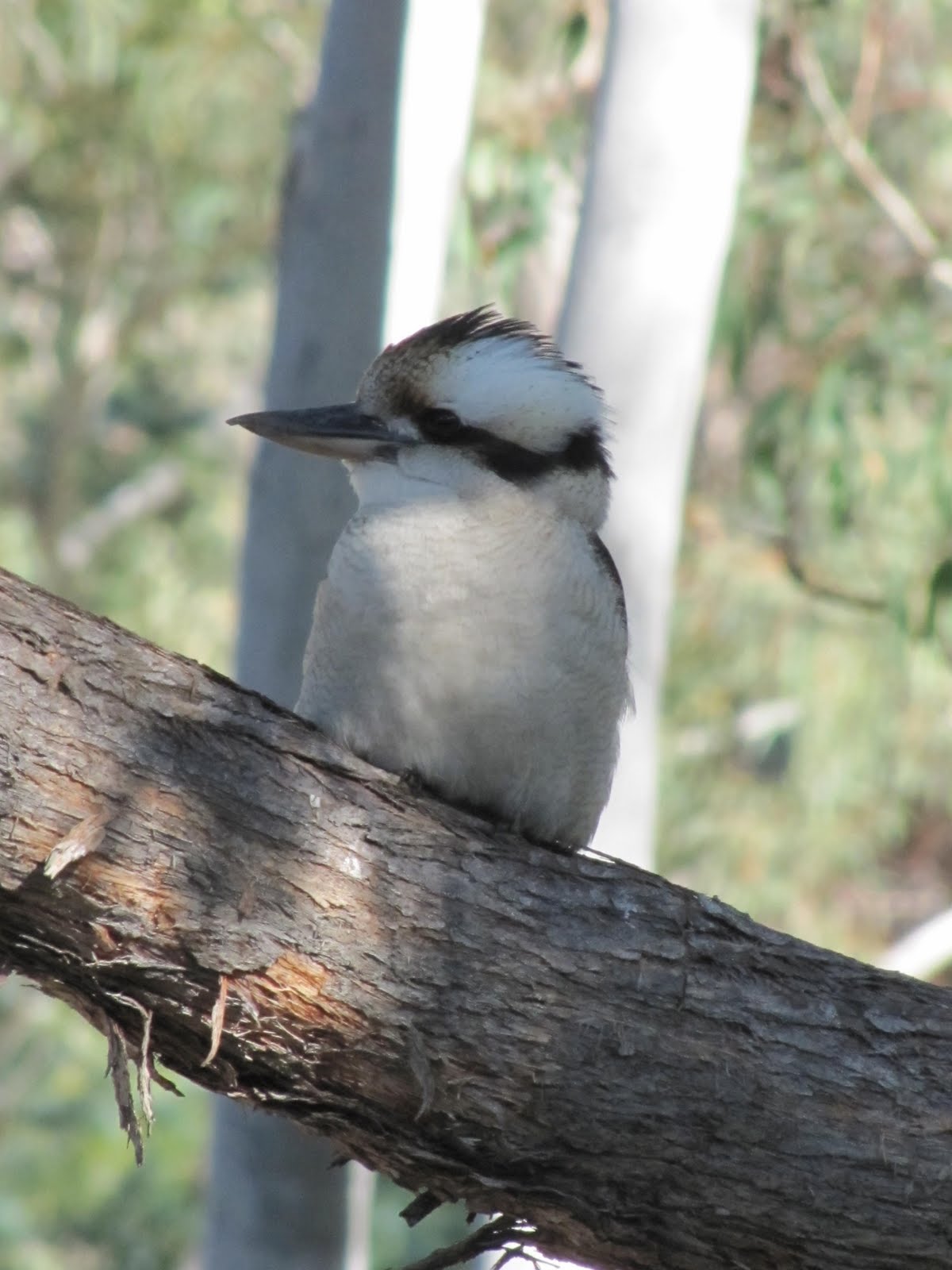
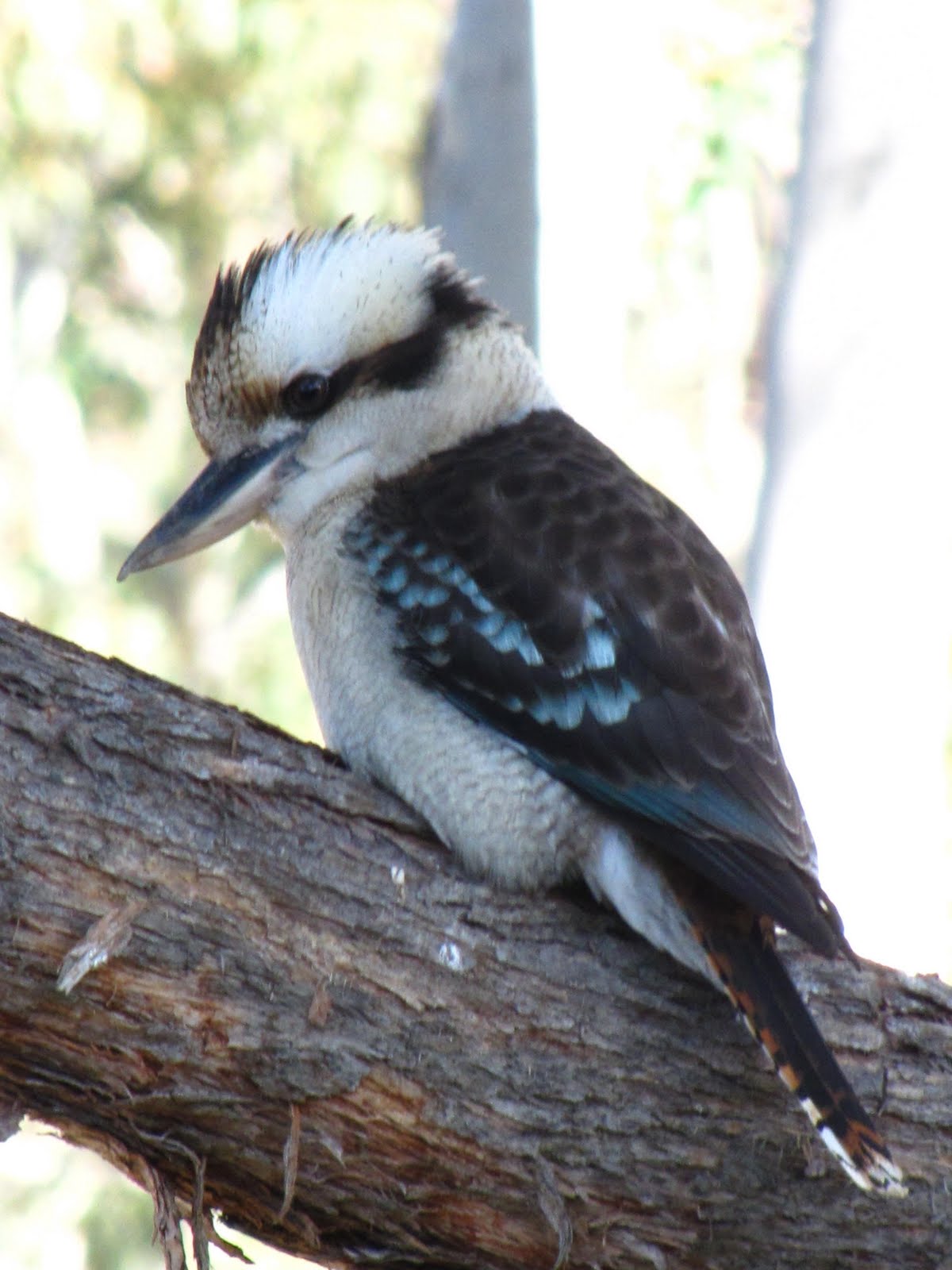
However, as I walked through the trees I heard the unmistakable laugh of the
Kookaburra Dacelo novaeguineae. I was very excited, as I knew there are Kookaburras about as they often come to the trees outside my office, but I figured to take a picture of them there is 'cheating' as its not in the gardens, so I've been waiting to find them here. He was quiet for a bit, but then I spotted him sitting on a small tree, so I got a good shot as he surveyed the ground below:
Then he swooped down for his lunch! He was so quick and gobbled it up all at once that I only managed to get a picture when it was all gone:
So, I was somewhat distracted from my plan to blog about trees! I did notice one of the Eucalyptus trees had what looked like little branches growing out of it's trunk, I wonder if it was some Mistletoe recently attaching itself?
Unfortunately, it was already time to head back to the office, so the tree blog will have to wait for another day. However, on my way back I noticed a number of interesting flowers beginning to bloom and discovered they were of the
Hakea genus. According to ANPSA these are often thought of as a poor relation to Grevillea, but I thought they deserve better than that, particularly the
Hakea kincora which is an unusual and very pretty globular Hakea.
Another couple of Hakeas are pictured below, the delicate
Hakea cycloptera according to
Wikipedia commonly called the 'Elm-seed Hakea' and
Hakea nodosa which apparently has a pungent smell, though I can't say I noticed!
Admittedly, the Grevilleas are stunning and two more species I noticed were in flower today, so I will finish with some pictures of two beauties from Western Australia. The first is Diels Grevillea
Grevillea dielsiana - though according to that website it should flower in August-September, I suppose it behaves differently here in the East?! The other is the rare Collie Grevillea
Grevillea ripicola, which is said to flower at this time of year or in late spring.